I was just at the beach here in Miami, listening to someone bemoan their recent assent to middle management. Anyone that has worked in corporate will tell you that it is difficult to be a first time manager, and even more difficult to work for one. She was complaining that her direct reports, mostly Gen Z, didn’t respect her. She attributed their behavior to a generation defect. They are known for having issues with authority, apparently. Doesn’t everybody? I thought. Or at least, shouldn’t everybody? I mean, look around at the state of the world. What has authority done for anyone not part of a protected class, especially young people, lately? Or ever?
I always assumed that my own issues with authority and subconsequent rebellious streak started in my teenage years. But upon closer examination, I think it must have been much earlier. Or perhaps I am just a contrarian by nature. As an example, the first Harry Potter book came out when I was in fourth grade. Our teacher announced that we would be reading it in class, and that publishers predicted it to be the most popular and best selling children’s book of all time.
I had a visceral reaction to this information. They can’t know that. I thought to myself. It hasn’t even come out yet. So I decided right then and there, having never read the book, that I didn’t like it. I made up my mind that I wouldn’t be a fan like the rest of the sheeple in my class. But of course, I did like the book. And I continued reading the series, though I never finished. I must have dropped off somewhere between Harry Potter and the Goblet of Fire (2005) and Harry Potter and the order of the Phoenix (2007).
By this time I was busy graduating high school and starting out on my own as a young adult. I wasn’t interested in escaping into fantasy like the kids would later see playing quidditch on my college campus, or Dungeons & Dragons. Or Disney Adults, or LARP, or theater kids in general. On the one hand I admire them because of their defiance of societal norms. And I envy them because they found community by embracing parts of themselves that they may have been told to keep hidden. And I can’t imagine doing anything more vulnerable at that stage of life. But on the other hand, I can’t help but wonder if, on some level, it is a form of arrested development.
And at 17, I already thought I was grown. I didn’t have anything resembling a direction in my life, but that didn’t stop me from sprinting to get to some sort of finish line. The world felt difficult and chaotic at that time in my life, and my taste in literature reflected that. I read the likes of Charles Bukowski and William Burroughs instead. At the time I thought this made me somehow mature, intellectual even. I found a kind of comfort in their hedonistic and self destructive tendencies. Their angry and bitter perspectives validated my own.
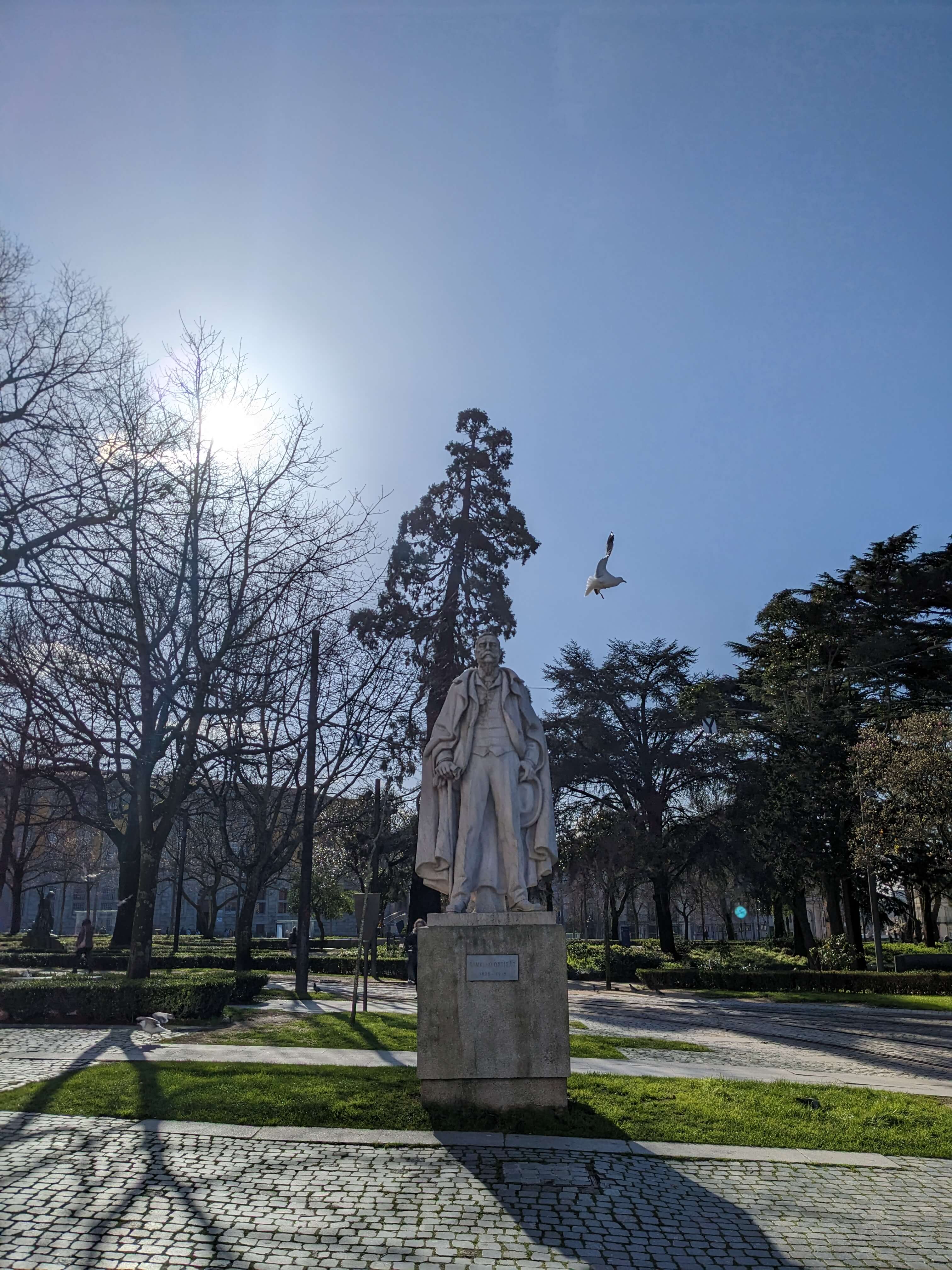
Fast forward to my NiNi tour in February of 2022. I was in Porto, tagging along while my husband was there for job training. I wasn’t technically traveling alone, but everything I did during the day was solo, as he was busy with work. There are not a lot of touristy things to in Porto. But it has become famous among hardcore Harry Potter fans. J. K. Rolling taught English for a time at Porto University. As a result there are allegedly certain elements of the town that influenced the books. The most famous is the book store by the university, Livraria Lello. The unique spiraling staircase may just be the inspiration for the library at Hogwarts..

To visit the bookstore, you must purchase a timed ticket which includes the cost of a book. I was staying in Porto for over a week with little to do. So despite my mediocre feelings about the franchise, I decided to take a look. The day I went it was pouring rain. Even with the ticketing system in place and the terrible weather there was a reasonably long line to get in. In the summer, peak tourist season, people wait for hours. The inside of the small store was crowded. Everyone was jockeying for the same picture of the staircase. I toured around just briefly and picked out The Little Prince in Portuguese for my purchase.
On another day I took one of those free walking tours that are ubiquitous in Europe. To my surprise, they had more options in Spanish than English, so I selected one in Spanish. It turns out that Portugal is an especially popular destination with Spanish tourist.

I learned that Porto was the original capital of Portugal until the King moved it to Lisbon in 1256. Now Porto is an industrial town. There is a local saying that “Porto is for work and Lisbon is for play.” While Porto may not be the most traditionally picturesque European town, it certainly has its charms. We took in some of the best viewpoints of the city and visited a few buildings featuring the famous hand painted tiles of Portugal. The highlights included the twin churches Carmo and Carmelitas, the main train station, and far less notably, the local McDonald’s.
After the tour I trotted down to the Douro river. It marks the southern boarder of the city, separating the historic center from the more modern suburbs. Folks were taking boat tours and having lunch. From the river I caught an old fashioned wooden tram with brass fixtures. I rode it to the end of line, where the river meets the ocean. It was another stormy, overcast day with crashing waves. Looking at them, it wasn’t hard to imagine Nazaré, located a few hours drive south of Porto. This sleepy fishing village attracts big wave surfers from all over the world with monster 100 foot waves.

The most memorable part of the trip was the first night. My husband took me to a dimly lit restaurant near Porto Cathedral to listen to Fado. This style of music originated from the poor and working class living in Portugal in the early 1800s, namely fishermen and sailors. The feeling of the music is characterized by a sense of melancholy. The lyrics gravitate around permanent, devastating loss. The woman on stage crooned beautifully and mournfully, accompanied by a man playing guitar. Both were older and smartly dressed in formal attire. I couldn’t understand most of the words, but the feeling of the music carried me away and I wanted to cry with her.

In the end, Porto in February left me with a cold, beautiful and lonely feeling. I felt like an outsider, a tourist in an industrial town. I was an interloper, taking up space in a bookstore that while sacred to others, to me was just another beautiful bookstore. At that moment in time, I was adrift in my life after being part of a sudden mass layoff a few months earlier. My world once again seemed chaotic, and I found myself as directionless as when I was 17. But this time, I was using travel to escape into my own kind of fantasy.

This event forced me to confront the reality that I had built too much of my identity and self worth around my work. Without it, I didn’t know nearly enough about who I was and what I wanted. And while in may seem like a strange kind of comfort, Porto was the perfect setting for me to begin this deconstruction process. I had the time and space, and found validation in the tumultuous waves of this costal town and the music inspired by it.
Leave a Reply